
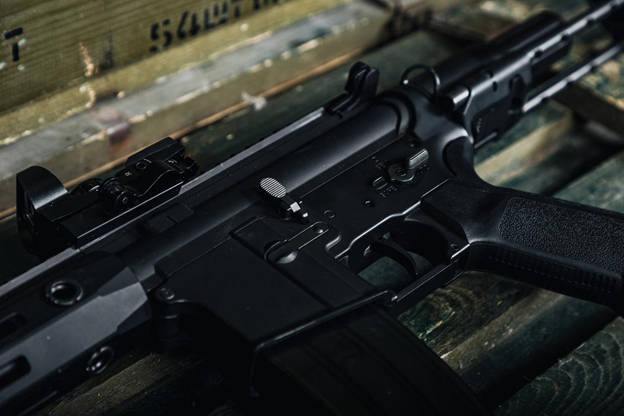
Unlike most other firearms, AR-15 rifles, like some other sporting rifles, have two receivers, rather than just one. These are the upper and lower receivers, which contain different parts and which function differently. This post will break down some of the differences between these two “types” of receivers.
What Is an Assembled Upper?
An assembled upper is an upper receiver that contains pretty much every part needed to mate to a complete lower receiver, thereby creating a functioning rifle.
An assembled upper contains the upper receiver itself, along with a barrel, handguard, muzzle device (if applicable), and gas system. It should also contain an ejection port cover (AKA dust cover), along with a charging handle and forward assist.
Some assembled uppers also come with bolt carrier groups, but not all do, so double check that before buying one.
What Is a Stripped Upper?
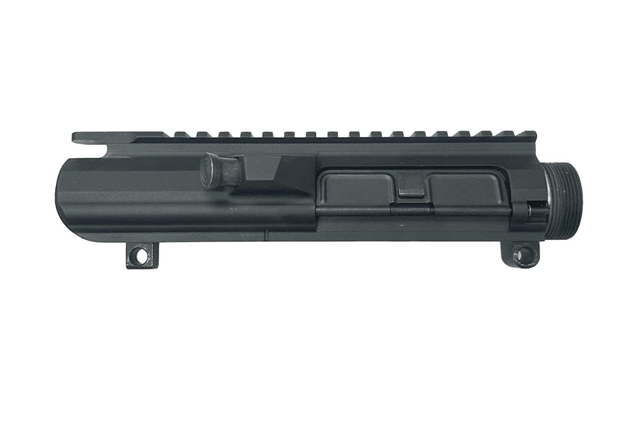
The stripped upper is the upper receiver itself. It does not contain a barrel, bolt carrier group, handguard, or other parts necessary to complete a functioning rifle.
The stripped upper receiver is necessary to complete a functioning rifle, but it is not the part that is serialized and controlled by the ATF as the “firearm itself.” Therefore, no FFL transfer or background check is necessary to buy either a stripped or assembled upper.
What Is a Short Upper?
There is no standard definition for what qualifies as a short upper, but most would agree that a short upper is anything smaller than a carbine upper - that is, with a barrel length of less than 16”.
It is important to note that a rifle with a barrel of less than 16” is considered a short barreled rifle, or SBR, and is heavily regulated by the NFA.
Other short uppers might be considered AR15 pistol uppers, if they were intended to make AR15 pistols, which, even though they have short barrels, are designed to be fired with one hand and therefore are considered pistols, not short barreled rifles.
Is There a Difference Between an SBR and an AR15 Pistol Upper?
Yes, as described in the last section, a short barreled rifle is a rifle with a barrel of less than 16 inches, but which is intended to be fired from the shoulder.
An AR15 pistol upper also yields a build with a barrel of less than 16 inches, and some are very short. There are even 5 inch AR uppers. However, these platforms are designed to be fired with one hand and therefore are not considered SBRs.
That being said, there are pistol braces that are used to help stabilize AR15 pistols when firing, which can assist with controlling recoil, especially if the AR15 pistol is chambered in a higher-recoil rifle caliber.
What Is a Lower?
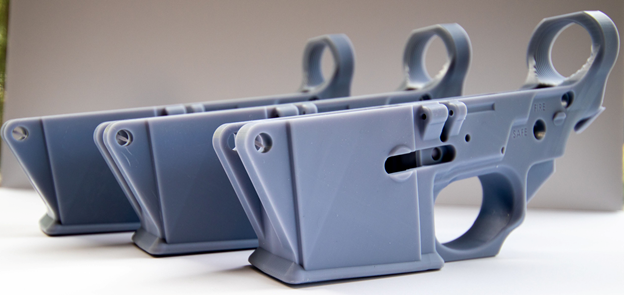
A “lower” is a lower receiver, which is the other of the two receivers that are necessary to assemble a complete, functioning rifle. The lower receiver houses the trigger assembly and the fire control unit, and is the part that is considered the “gun” itself.
Consequently, the ATF requires lowers to be serialized; moreover, purchasing a lower receiver requires an FFL transfer and a background check.
What Is an 80% Lower?
An 80% lower, also known as a receiver blank, is a lower receiver that has been partially milled and machined, but which needs additional machining to complete the holes and recesses necessary to house the trigger, fire control unit, and certain pins.
Since, in its unaltered state, an 80% lower cannot be used to assemble a functioning rifle, they are not considered firearms and no FFL transfer is required to buy one. Even so, many states and other local jurisdictions have levied regulations outlawing lower receiver blanks, making them illegal to purchase, possess, or alter.
Before attempting to undertake a project involving an 80% lower, consult a firearms lawyer in your area if you have any questions.
What Comes with an AR15 Lower Parts Kit?
Even if you have a completed lower receiver, you will need the associated lower parts in order to assemble it and pair it with an upper before you can create a functioning rifle.
For this purpose, some parts sellers offer AR15 lower parts kits, which contain pretty much all the parts you need to complete the lower. Most AR15 lower parts kits will come with:
- A magazine catch
- A safety selector
- A bolt catch assembly
- A buffer tube detent and retainer
- Safety springs and detents
- A trigger assembly
- A trigger hammer pin
- Takedown and pivot pins, detents and springs
Always check the parts listing of any AR15 lower parts kit to make sure it contains everything you need to complete your project.
Is It Better to Buy an AR or Build from a Kit?
Ultimately, that depends on what your goals are. Buying an assembled rifle is faster, easier, and can be more economical. However, building your own rifle from parts or a parts kit will give you greater control over the rifle build and afford the flexibility to customize along the way, though it requires some technical knowledge, a few tools, and will take longer.
Explore Assembled Uppers and Other AR Parts Here
Whether you’re here for an assembled upper, AR pistol parts, or an AR15 lower parts kit, we have what you need for your project. Take a closer look through what we offer here and get in touch with us if you have any questions or need help finding a specific part.