
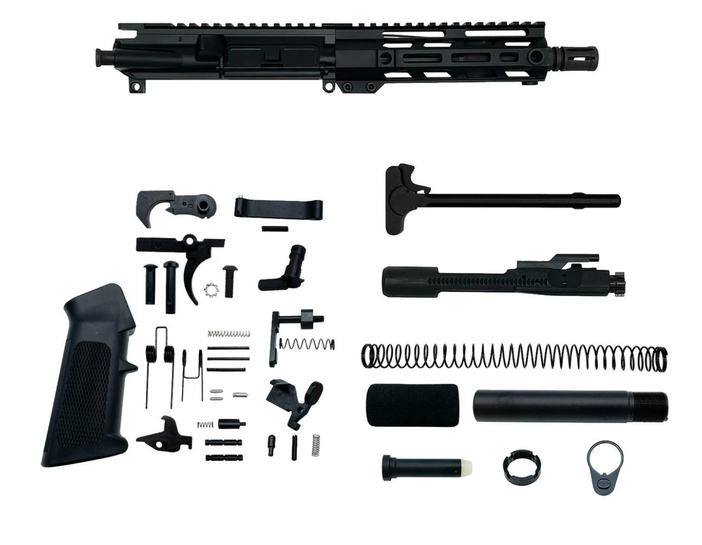
Most, but not all AR-15 rifles and similar platforms are chambered in either 5.56 or .223. That’s just the way of things. This goes for variants on the build, too, such as ARPs.
The thing is, 5.56 and .223 perform well from a carbine-length barrel, and even better from a longer rifle barrel. The cartridge is fast, shoots flat, and delivers reasonable stopping power. It even maintains a lot of its ballistic performance at range.
This makes the 5.56 and .223 both excellent options for AR builds, but if you’re specifically looking for a more compact build, that is, more compact than a carbine, there are other, better cartridges.
Specifically, if you want to maintain rifle firepower (even, in this case, exceed it) one of the better options at your disposal is to build a 7.62 AR. Here’s what you should know.
The Shorter Barrel Magic
Before we go any further, it’s important to specify here that we’re talking about 7.62x39mm, also known as 7.62 Soviet. This is a very distinct cartridge from its cousin across the pond (which is not really a cousin at all), the 7.62 NATO.
Also (and more properly) known as 7.62x51mm, the 7.62 NATO is a bigger and more powerful cartridge than 7.62 Soviet. It is also one that performs much better at greater ranges, and it does not deliver the same performance from a shorter barrel.
Since that’s what we’re after here, it is very important to draw this distinction. That’s not even to mention the fact that despite them both being 7.62 caliber cartridges, they are not related and they are not interchangeable. As far as cartridge dimensions and ballistics are concerned, our version of the 7.62 (NATO) is much more closely related to the .308 WInchester than to 7.62 Soviet.
But this is a digression. Our purpose here is to explore the performance of 7.62 Soviet from a shorter barrel, which produces one of its most glaring advantages over builds created around 5.56 and .223 uppers.
The truth is, regarding the performance of the 5.56, is that it was designed to deliver optimal power and performance from a 20 inch barrel. This barrel length effectively ensures complete power charge deflagration and bullet acceleration, so you get the highest muzzle velocity and greatest stopping power with a barrel this long or longer.
That said, you don’t need an AR upper with a 20 inch barrel. You can choose a shorter barrel of 18 inches or even carbine length, at 16 inches. Obviously, this doesn’t need to be explicitly mentioned, but many ARP builds are chambered in 5.56 as well, so you can go even shorter.
The downside is that, as barrel length decreases, there’s less time for the powder charge to fully burn up, and less time for the bullet to accelerate through the bore. There’s a twofold effect here; you’re leaving performance on the table and the bullet won’t be moving as fast when it gets to the muzzle, so you’ll be getting robbed of a little bit of muzzle velocity and energy. The bullet also won’t shoot as flat.
On top of that, because the shorter barrel length doesn’t give the power charge enough time to burn up, you’ll get a lot of fouling as well. ARPs chambered in 5.56 or .223 may offer rifle-sized firepower in a compact format, but they are also notoriously dirty.
This issue does not befall a 7.62 AR upper. This cartridge will perform nearly as well from barrels as short as 10 or 11 inches as it will from a barrel of 16 inches or longer. There will be some loss of ballistic performance, but minimal compared to a faster, hotter cartridge like a 5.56.
The takeaway here is that if you’re building an SBR or ARP, and a short barrel is necessarily involved, the 7.62 Soviet might be a better chambering. It’ll perform better from a shorter barrel and on top of that will produce considerably more stopping power for threat neutralization than 5.56 would or could, regardless of barrel length.
So, if your goal is to build an AR platform that’s shorter and lighter, not only without sacrificing performance but technically expanding it (at least at close ranges) then a 7.62 AR upper can be a considerably better option than a 5.56 AR upper.
(And, as one final note, if you want to make the build shorter and lighter, install a short buffer tube and remove the flash hider and replace it with thread protectors.)
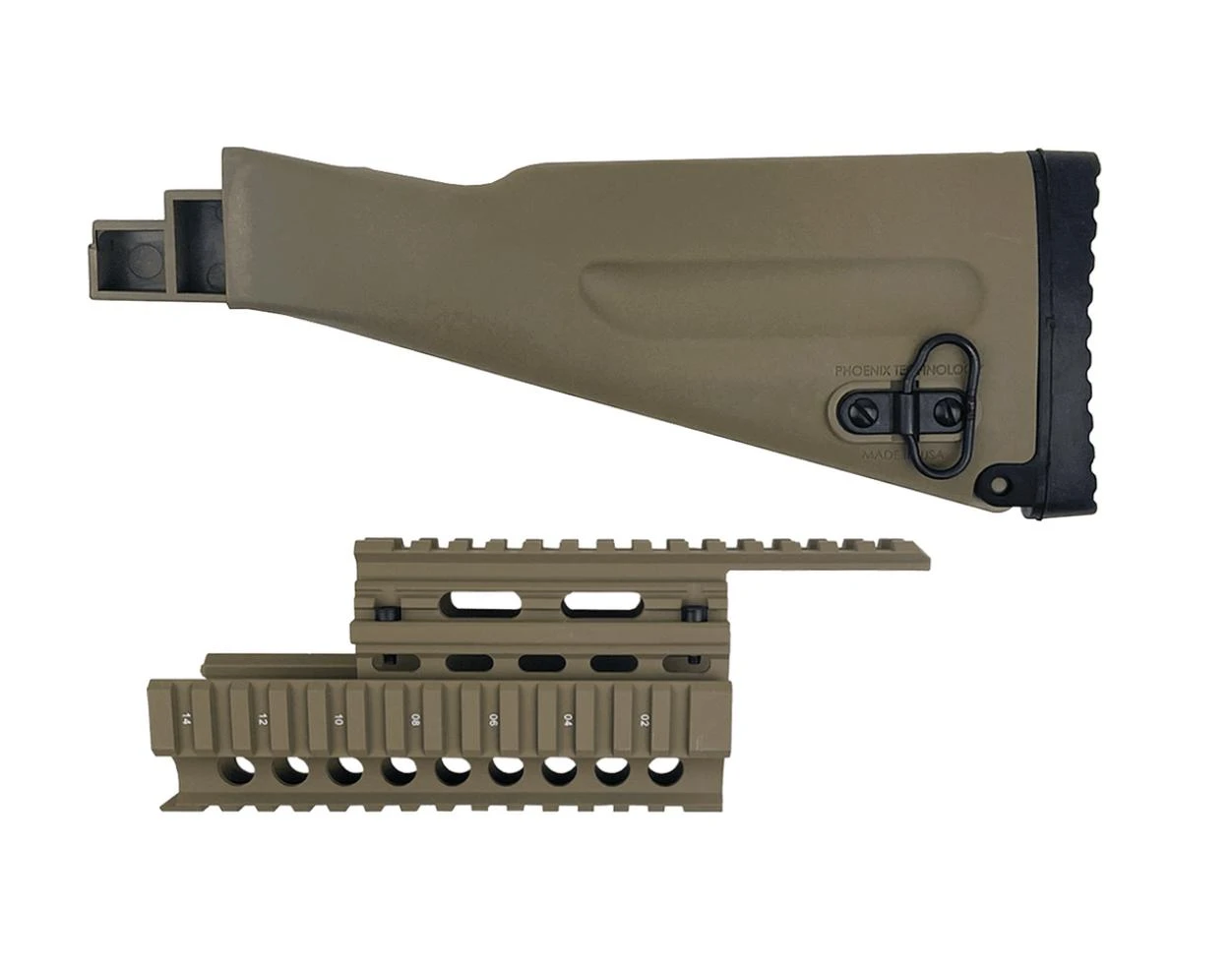
Here for a 7.62 AR Upper or Other AR Parts
In the market for a 7.62 AR upper for your next build? Check out our collection of assembled uppers and get in touch with us if you have questions before you buy.