
AR build kits often come with everything you need minus the lower receiver, since that is the AR part that is considered the actual firearm, is serialized, and requires an FFL transfer.
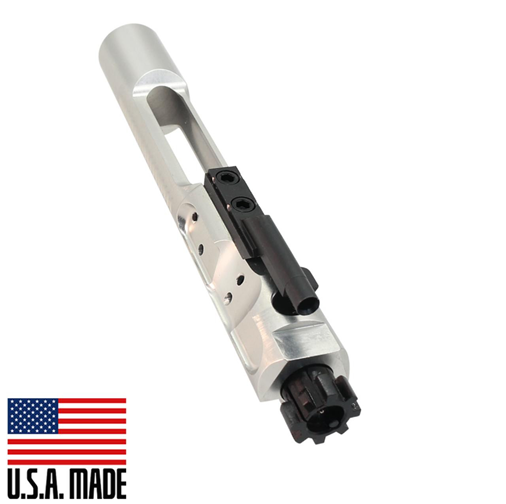
But, most of the time, complete AR build kits will come with everything you need, and that includes the bolt carrier group, which is, in many ways, the heart of the rifle.
The bolt carrier group that comes with most build kits, where present, is a mil-spec model that is treated with a phosphate coating that gives it a little tooth, reduces reflectivity, and holds liquid lubrication.
Mil-spec bolt carrier groups also tend to be fairly heavy, usually in the area of 11 ounces and change.
There are modern, lightweight bolt carrier groups that you can get that will offer several different benefits to you. Here’s what you should know.
What Is a Bolt Carrier Group (AKA BCG)?
Let’s walk before we run. In the event you’re not familiar with firearm mechanics, the bolt carrier group is an AR part that houses the firing pin, spring, extractor, ejector, and springs for those, respectively.
The bolt carrier group also contains locking lugs that lock into the barrel extension, and a cam pin that keeps the bolt closed during firing, as well as gas rings that communicate with the gas system so that the BCG can operate semi-automatically.
For these reasons, the bolt carrier group has been referred to as the heart of the rifle, because it is central not just to feeding, firing, extraction and ejection, but because it communicates with both the gas impingement system and the buffer system, enabling semi-automatic, autoloading operation.
So, given that, why would you ever want to switch out the mil-spec BCG that may have come with your AR build kit for a lightweight alternative?
Let’s take a closer look.
Should You Swap the Stock BCG for a Lightweight BCG?
If you’re considering swapping the mil-spec BCG in your build kit for a lightweight bolt carrier group, here are some of the most commonly-cited benefits:
- Lightweight bolt carrier groups can reduce recoil. There are two components that constitute mass in a firearm platform. These are static mass, which does not move during cycling, and reciprocating mass, which does. Most of the rifle is static, but the bolt carrier group, which moves back and forth (reciprocates) during cycling, is not. The more reciprocating mass there is, the more recoil the operator will experience, holding all else equal. Because lightweight bolt carrier groups have been strategically lightened, they tend to produce less felt recoil, which in turn reduces overall muzzle jump, keeping the sights on target and enabling faster, more confident, more accurate follow up shots.
- Lightweight BCGs can cycle more quickly. Lightweight bolt carrier groups are so designed that excess and unnecessary mass has been removed, which doesn’t just cut felt recoil, it also helps the bolt carrier group actually cycle more quickly. This reduces action time, which means the rifle can physically fire more actively, which is beneficial to some shooters, particularly those engaged in competitive shooting disciplines in which speed is an aspect of scoring.
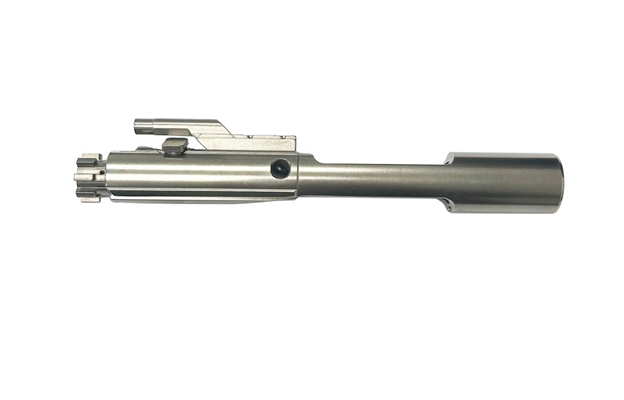
- Lightweight BCGs are sometimes treated with advanced coatings and finishes. Many modern lightweight bolt carrier groups are treated with advanced finishes like black nitride, titanium nitride, nickel boron or diamond-like carbon (DLC). These coatings increase hardness and wear resistance along with chemical resistance, and they also offer excellent permanent dry lubricity, which means they need less liquid lubrication to keep them running smoothly. On top of that, they are easier to clean because fouling and other debris won’t adhere to them as easily thanks to the slick surface.
These are three of the best advantages associated with lightweight bolt carrier groups, but if you have questions you can also reach out to us.
Just Make Sure You’re Aware
While there are many potential advantages to lightweight bolt carrier groups, it’s important to be aware that they don’t automatically perform reliably with all ammo and hardware.
You may also have to tune your gas system or adjust your buffer weights to ensure reliability and consistency, as the lighter BCG may benefit from a lower buffer weight or from less gas. A lighter recoil spring may also be necessary to prevent short stroking and other issues.
Here for an AR Build Kit or a Lightweight Bolt Carrier Group?
Whether you’re here for an AR build kit, a complete assembled upper or piecemeal AR parts like a lightweight BCG, we have you covered.
Shop our collection and take a closer look at the build kits and parts we offer, and if you have any questions about parts compatibility or how to tune your rifle once you install a lightweight bolt carrier group, get in touch with us at Sales@MCSGearup.com