
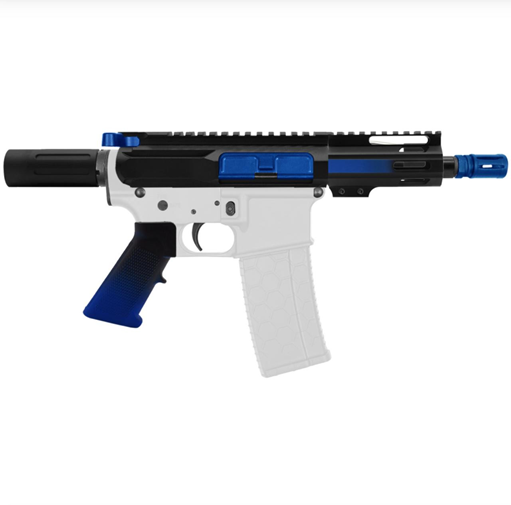
We’ve come a long way since the phosphate coatings of the last century. When it comes to protecting gun parts, there are a wide range of modern coatings that provide excellent wear and corrosion resistance. In the case of bolt carrier groups, some modern coatings like DLC and nitrided coatings even provide a higher level of permanent dry lubricity that reduces the need for liquid lubrication.
Case in point: cerakote and anodized AR15 parts. Here’s what these two finishes are and what they offer, compared and contrasted with each other.
Cerakote AR15 Parts
Cerakote coatings are basically a very thin, ceramic-based coating that is applied to the top of a substrate. While Cerakote could theoretically be applied over the top of any material, it is most commonly used on top of metals, primarily steel and aluminum alloys.
Because it is ceramic-based, Cerakote finishes are extremely hard. This gives treated parts a very high degree of wear and abrasion resistance. Properly applied, it is also waterproof, giving the treated part excellent chemical stability and resistance to moisture intrusion.
Cerakote is also highly resistant to heat, which makes it an excellent finish treatment for parts that will experience a high degree of thermal stress. Another important functionality benefit of Cerakote is that it has an excellent degree of resistance to UV exposure.
Cerakote is also preferable since it is physically deposited on the surface of a material, which means it can be applied to any surface. Only aluminum parts can be anodized.
Another benefit of Cerakote is that there are many different colors that are available, which makes Cerakote AR15 parts popular among those who want creative ways to customize their rifles with unique colorways. Cerakote can be very bright and since it is chemically stable, it remains vibrant even after it is exposed to harsh conditions.
One thing to note is that, while a Cerakote finish is very thin, since it is deposited on the surface, it does technically change the dimensions of the part. For this reason parts that have very tight tolerances are not typically (or cannot be) Cerakote finished.
One potentially shortcoming of Cerakote finishes is that since they are physically deposited on a surface and not technically integrated with it, under very extreme conditions, it is possible for the finish to separate and crack or chip away. This is however very unlikely under normal circumstances.
AR15 Anodized Parts
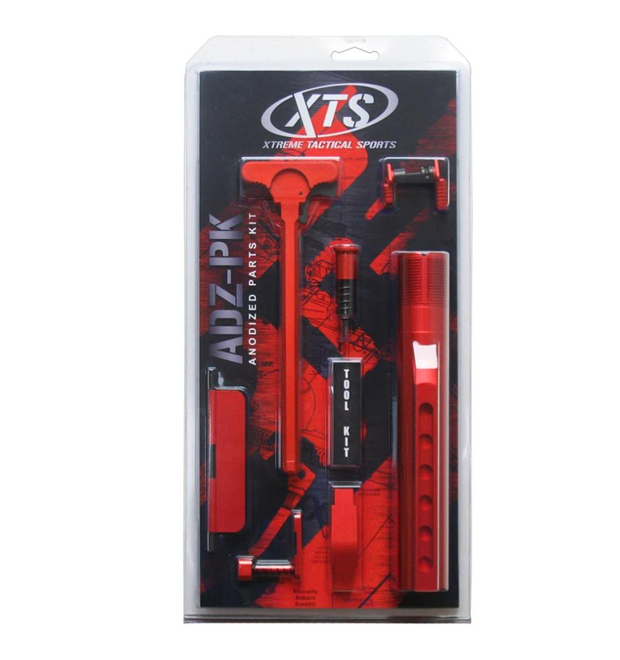
Anodized AR15 parts, like Cerakote parts, are also very popular and are accompanied by a wide range of potential and material benefits.
First, let’s look at the main difference. Cerakote is a ceramic-based finish that is applied on the top of a surface and so it can be applied to any substrate, not just aluminum or steel, but also plastic and wood, among others.
Anodization is a chemical process that is used to convert the surface of aluminum to aluminum oxide. The finish, once applied, becomes integral with the aluminum, and even though it is very, very thin, it cannot chip or flake away, though it is theoretically possible to scratch it or wear it away.
That said, even though the layer is very thin, anodized aluminum is very hard, making it very wear and abrasion resistant. It is also highly chemically stable and resistant to moisture as well. As a result, anodized AR15 parts have the same benefits of wear-resistance and chemical stability as Cerakote AR15 parts.
Unlike Cerakote, AR15 anodized parts sport a finish that is integral with the surface of the part and so it does not change the dimensions of the part. For this reason anodization can be applied, like nitride or DLC, to effectively any part, even one that has very tight tolerances.
Another thing to note is that, since Cerakote is physically deposited, it does technically add a little bit of weight to the treated part, whereas an anodized part should be effectively the same mass as one that has not been treated. This is negligible, however.
As stated, however, anodization is a process that can only be applied to aluminum parts. As a result, receivers are typically anodized, as are handguards and other aluminum parts. Steel parts like barrels and bolt carrier groups are typically nitrided or treated with some other finish more appropriate or practical with steel.
Like Cerakote, AR15 anodized parts are available in a wide range of colors, opening up the door for a variety of different customizations.
Ultimately, however, both Cerakoted and anodized parts offer a lot of the same benefits and offer a great deal of protection to treated parts against a wide range of conditions and environmental factors.
Shop AR15 Parts Here
Whether you’re here for Cerakoted parts or want to upgrade your rifle with AR15 anodized parts, check out our collection and get in touch with us at Sales@MCSGearup.com if you have any questions.