
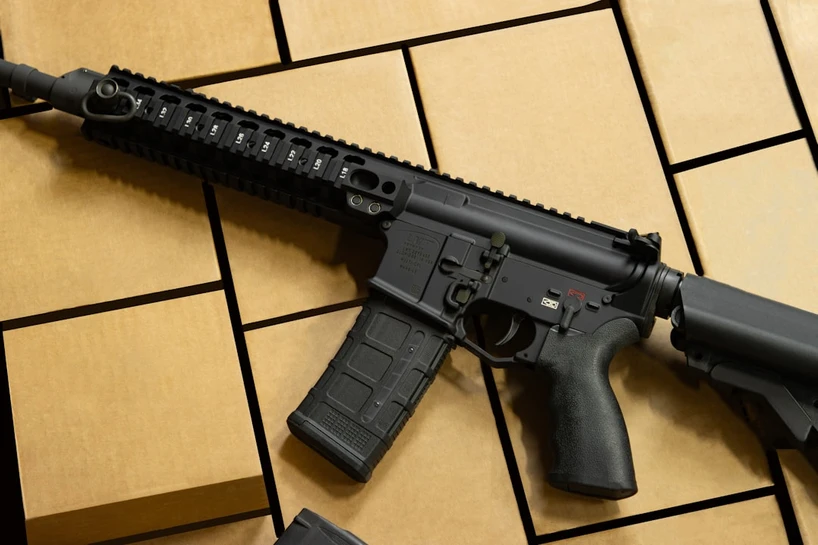
The .300 Blackout is a popular alternative to home builders and other fans of sporting rifles, and it offers one serious advantage over it: performance from short barrels. We’ll take a closer look at that here, as well as investigating one of the shortcomings of the chambering.
Performance from a Shorter Barrel
One of the biggest selling points of .300 Blackout is that, despite the fact that it is a rifle cartridge, it performs very well from shorter barrels.
This makes it an excellent choice for those that want to build a short barrel rifle (SBR), a PDW, or an ARP.
The problem with many rifle cartridges, such as .223 and 5.56, around which AR style rifles are commonly built, is that they require a longer barrel in order to let the powder charge fully deflagrate.
These fast-shooting cartridges, if they are fired from a shorter barrel, (like an ARP-length barrel) will produce a lot of fouling and a lot of port pop.
Not only does this make the platform harder to clean, but on top of that, you leave performance on the table.
The fact that the propellant charge has inadequate time to fully deflagrate also means that the bullet won’t attain desirable muzzle velocities. At the very least you’ll be leaving some performance behind.
By contrast, a .300 Blackout round can attain top muzzle velocity from a barrel as short as 8 inches, which is right in ARP territory.
You could go even shorter without much loss of power, but ultimately, whether you’re interested in building an SBR or an ARP, just for the fact that .300 BLK performs so well from a short barrel, it is an ideal option.
Less Than Desirable Intermediate and Long-Range Performance
While a .300 Blackout build can be an excellent option just for the fact that it will perform well from a shorter barrel, the truth is also that this is not a cartridge to choose if you are concerned about intermediate range, or worse, about long-range performance.
It’s questionable for intermediate ranges and very ineffective at longer ranges. To illustrate this we’ll look at a hypothetical example in which we’re looking at a .300 BLK round loaded with a 150 grain bullet that leaves the muzzle at 1960 FPS.
That bullet will have about 1280 ft-lbs of muzzle energy, and when zeroed at 100 yards will retain about 1050 ft-lbs of energy.
But, even when zeroed at 100 yards, by 200 yards, it will have dropped almost 10” and bled off considerable energy, retaining only 858 ft-lbs.
By 300 yards, the same round will have dropped almost 33” and will retain only 700 ft-lbs of energy.
We can likely agree that 500 yards is hardly much beyond intermediate range, but by this point you can really see the deficiency of .300 BLK; the same round will retain only 476 ft-lbs of energy, which isn’t horrific, but it will have dropped over 132”, which is more than 10 feet. That’s not a good look.
Either way, the takeaway here is that it’s not a good cartridge for long-range shooting. Choose something else if that is your aim.
What Else?
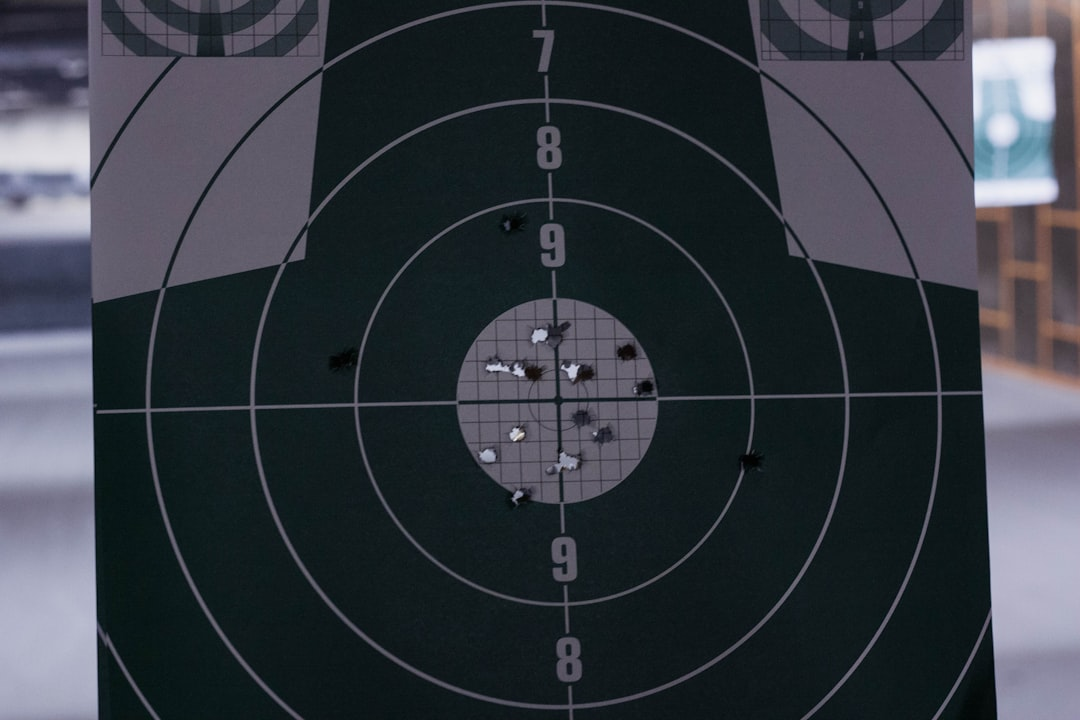
This only paints a pretty abbreviated portrait of what makes a .300 Blackout build a good option for AR shooters looking for something besides the standard 5.56.
There are other benefits of a .300 Blackout build as well. Some of the best of these are:
- There are a wide variety of different loads, some of them with heavy bullets and others that are subsonic loads that are very quiet and which respond well to suppression.
- .300 Blackout responds well to suppression regardless, which makes it a good option for shooters that want to protect their hearing.
- It produces considerably more stopping power than 5.56/.223, which makes it superior especially for close-range defensive applications.
- Because the .300 BLK cartridge is so similar to the 5.56, you can use most of the same components from a 5.56 rifle, including the bolt carrier group. In some instances, to complete a .300 Blackout build using 5.56 parts, all you need to do is swap the barrel. Contact us for details.
These are some of the best selling points of a .300 Blackout build, but at the end of the day if you want to build something with a short barrel that produces more stopping power than 5.56, and use most of the same parts, this is definitely a solid option.
Explore .300 Blackout Builds, Uppers and Parts Here
Need a .300 Blackout upper for your next build? You’re in the right place. Take a look through our collection of assembled uppers, which are available in a wide range of chamberings in addition to .300 BLK, such as .350 Legend, 9mm, 5.56, .223 Wylde, and much more.
If you have any questions about parts or compatibility, get in touch with us at Sales@MCSGearup.com before you buy.