
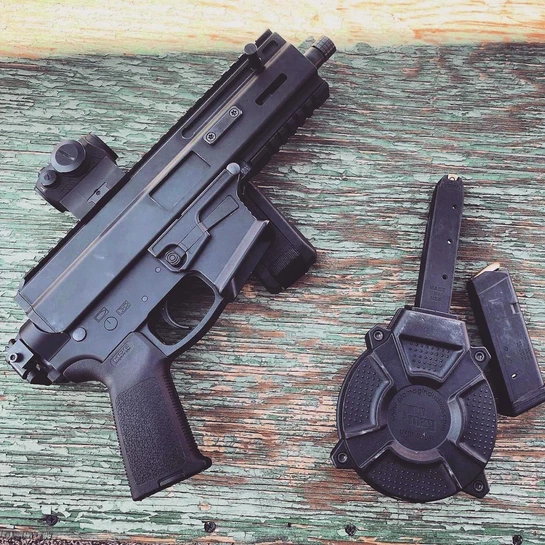
Strictly speaking, the AR as a platform is gas powered. If it doesn’t have a gas impingement system, it’s really hardly an AR. Then again, the AR is a rifle, so calling an ARP an AR could be said to be a misnomer, too.
But that’s hardly here nor there, because the focus of this article is going to be on three specific cases in which building a bufferless AR makes more sense than building a platform with a gas system, which means by necessity it would then need an AR buffer tube.
So, when should you consider a bufferless AR build rather than building a conventional one with a gas system?
When Size and Weight Command a Premium
No matter how you look at it, and even with the smallest of short buffer tubes available in play, an AR buffer tube will add not just length, but weight, to the build. This in turn means one of the most necessary ways you can reduce size and weight in an AR build is by eliminating the AR buffer tube altogether.
Short buffer tubes are better than nothing, especially if your assembled upper relies on a gas system, but if you can get away with it (more on that in a second) and you really need a lightweight, compact AR build with a small footprint, then one of the best things you can do is choose a bufferless AR upper that lacks a buffer system.
Now, there will be times when you can’t go bufferless, and it is what it is. But depending on your chambering you may be able to build a bufferless AR, which will save you on size and weight.
By the way, some other things you can do to reduce size and weight include:
- Removing the muzzle device.
- Installing a lighter weight handguard, like an M-LOK rail system.
- Installing a shorter barrel or a fluted barrel.
- Installing a lightweight bolt carrier group.
These are just a few of the best suggestions, but taken altogether, they represent some of the best ways to shorten and lighten an AR.
When You’re Working with a Low-Pressure Cartridge
Another great time to skip the AR buffer tube (and associated system) is when you’re building with a relatively low-pressure cartridge, like .22LR, 9mm, or any of several other handgun cartridges.
The gas impingement system of an AR is very reliable with higher-pressure rifle cartridges and delivers relatively smooth-shooting performance. However, it’s just not needed with smaller, lighter cartridges like .22LR and 9mm.
So, for instance, if you’re building a PCC or an ARP chambered in 9mm, you can make a much simpler and equally reliable platform that hinges on, for example, direct blowback rather than gas impingement. The system is simpler and does the same job as gas impingement with many fewer parts.
And, of course, on top of that, since direct blowback is bufferless, you won’t have the length of the buffer tube sticking off the back, or the added buffer weights.
Also, if you can find a roller-delayed blowback system, you get the same benefits, except roller-delayed blowback is even better. It is smoother-shooting than direct blowback, suppresses better, much more reliable, bufferless, and most importantly, more effective with higher pressure cartridges. Whereas direct blowback is only really safe with lower-pressure cartridges, roller-delayed blowback can be effective with higher-pressure rifle cartridges, too.
When You Need Simplicity
Lastly, it might make sense for you to build with a bufferless upper if only for the fact that direct blowback and other similar action types are a lot simpler, and have fewer parts, than a gas impingement system.
An AR’s gas impingement system, though it is very, very reliable when properly tuned and cleaned, and when all parts are in working order, is still a fairly complex firearm action design, and any instance of design complexity is an opportunity for failure.
The gas system relies on an operational gas block, an unobstructed gas tube, as well as the bolt carrier group’s gas rings (when they wear out performance gets sluggish). In addition, a gas impingement system needs an operational buffer system with appropriate weights tuned to both the caliber and gas system. And, if that were not enough, the buffer spring needs to be in shape as well.
With an alternative bufferless upper, such as a direct blowback upper, there’s really nothing to tune. As long as the spring is in good shape, the action should work as intended, and reliably at that.
Shop Bufferless AR Uppers (and AR Buffer Tubes) Here
When Bufferless Is the Best Option for Your AR Build
Strictly speaking, the AR as a platform is gas powered. If it doesn’t have a gas impingement system, it’s really hardly an AR. Then again, the AR is a rifle, so calling an ARP an AR could be said to be a misnomer, too.
But that’s hardly here nor there, because the focus of this article is going to be on three specific cases in which building a bufferless AR makes more sense than building a platform with a gas system, which means by necessity it would then need an AR buffer tube.
So, when should you consider a bufferless AR build rather than building a conventional one with a gas system?
When Size and Weight Command a Premium
No matter how you look at it, and even with the smallest of short buffer tubes available in play, an AR buffer tube will add not just length, but weight, to the build. This in turn means one of the most necessary ways you can reduce size and weight in an AR build is by eliminating the AR buffer tube altogether.
Short buffer tubes are better than nothing, especially if your assembled upper relies on a gas system, but if you can get away with it (more on that in a second) and you really need a lightweight, compact AR build with a small footprint, then one of the best things you can do is choose a bufferless AR upper that lacks a buffer system.
Now, there will be times when you can’t go bufferless, and it is what it is. But depending on your chambering you may be able to build a bufferless AR, which will save you on size and weight.
By the way, some other things you can do to reduce size and weight include:
- Removing the muzzle device.
- Installing a lighter weight handguard, like an M-LOK rail system.
- Installing a shorter barrel or a fluted barrel.
- Installing a lightweight bolt carrier group.
These are just a few of the best suggestions, but taken altogether, they represent some of the best ways to shorten and lighten an AR.
When You’re Working with a Low-Pressure Cartridge
Another great time to skip the AR buffer tube (and associated system) is when you’re building with a relatively low-pressure cartridge, like .22LR, 9mm, or any of several other handgun cartridges.
The gas impingement system of an AR is very reliable with higher-pressure rifle cartridges and delivers relatively smooth-shooting performance. However, it’s just not needed with smaller, lighter cartridges like .22LR and 9mm.
So, for instance, if you’re building a PCC or an ARP chambered in 9mm, you can make a much simpler and equally reliable platform that hinges on, for example, direct blowback rather than gas impingement. The system is simpler and does the same job as gas impingement with many fewer parts.
And, of course, on top of that, since direct blowback is bufferless, you won’t have the length of the buffer tube sticking off the back, or the added buffer weights.
Also, if you can find a roller-delayed blowback system, you get the same benefits, except roller-delayed blowback is even better. It is smoother-shooting than direct blowback, suppresses better, much more reliable, bufferless, and most importantly, more effective with higher pressure cartridges. Whereas direct blowback is only really safe with lower-pressure cartridges, roller-delayed blowback can be effective with higher-pressure rifle cartridges, too.
When You Need SImplicity
Lastly, it might make sense for you to build with a bufferless upper if only for the fact that direct blowback and other similar action types are a lot simpler, and have fewer parts, than a gas impingement system.
An AR’s gas impingement system, though it is very, very reliable when properly tuned and cleaned, and when all parts are in working order, is still a fairly complex firearm action design, and any instance of design complexity is an opportunity for failure.
The gas system relies on an operational gas block, an unobstructed gas tube, as well as the bolt carrier group’s gas rings (when they wear out performance gets sluggish). In addition, a gas impingement system needs an operational buffer system with appropriate weights tuned to both the caliber and gas system. And, if that were not enough, the buffer spring needs to be in shape as well.
With an alternative bufferless upper, such as a direct blowback upper, there’s really nothing to tune. As long as the spring is in good shape, the action should work as intended, and reliably at that.
Shop Bufferless AR Uppers (and AR Buffer Tubes) Here
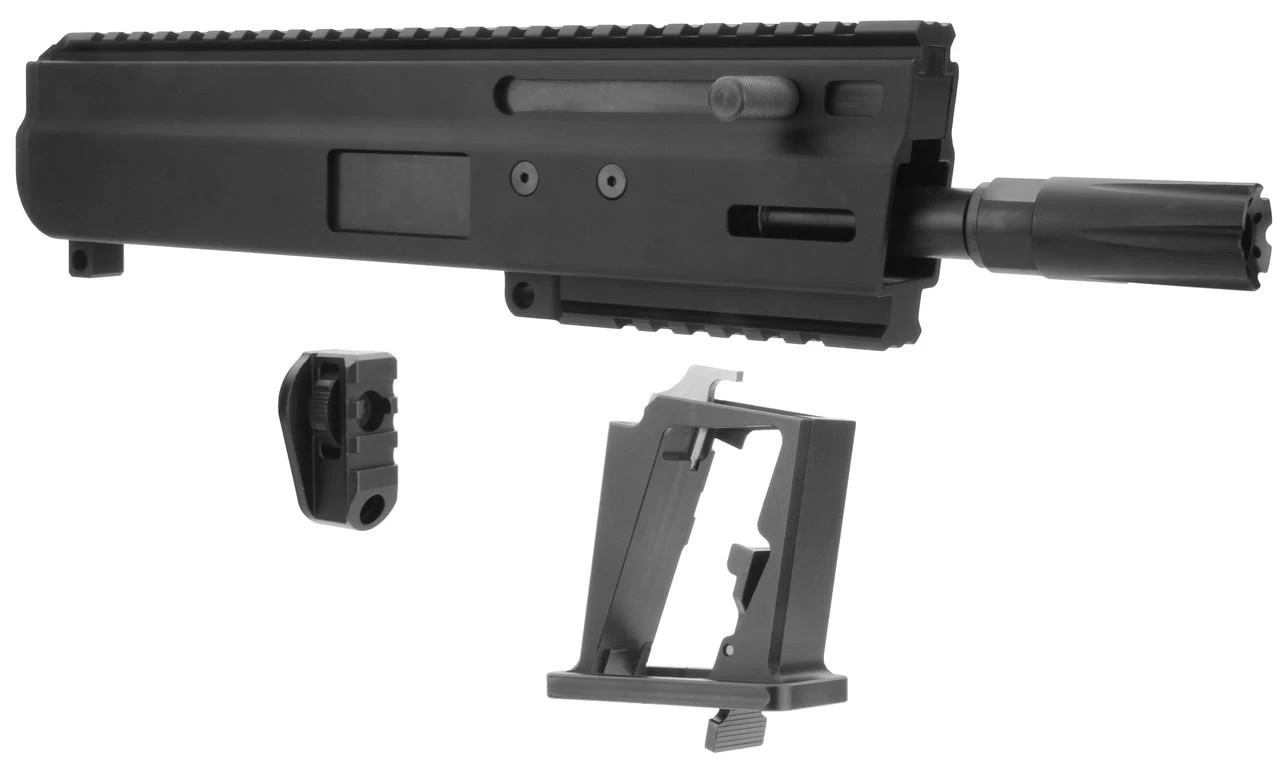
We don’t take a one-size fits all approach, and we know there will be some here who are looking for bufferless builds alongside traditionalists who want conventional AR parts like AR buffer tubes and gas system components. We carry all of them, and plenty of options to choose from.
We don’t take a one-size fits all approach, and we know there will be some here who are looking for bufferless builds alongside traditionalists who want conventional AR parts like AR buffer tubes and gas system components. We carry all of them, and plenty of options to choose from.